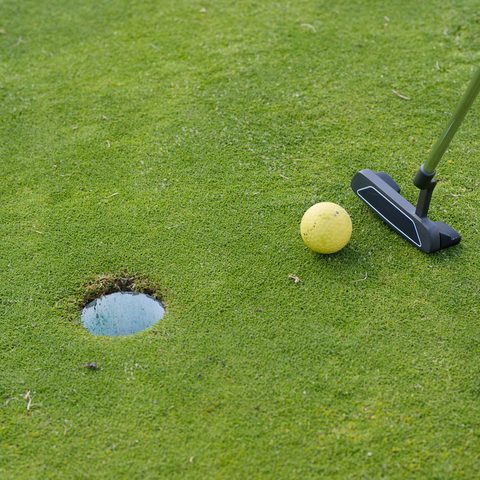
A backyard green is for people who want to work on their putting without driving to a course to do it.
Surprise Turf Works handles putting green installation in Surprise, from one cup on a side-yard strip to a shaped green with several holes, some break to read and fringe turf around the edge.
Putting turf is a different product from lawn turf. The blades are short and dense so a ball rolls more like it would on a course green, and the base under it is shaped and compacted with more care, because small dips that nobody notices walking across a lawn will turn a putt.
Before calling, try laying a garden hose on the ground to trace an outline; it makes size much easier to talk about. Then call 623-254-4115 or use the form. If the green is one piece of a bigger turf yard, the backyard turf page covers the rest.
Free quote. No obligation.
A green’s price depends less on square footage than on how it is meant to play. The main factors:
Most of these can be decided at the visit, but they change the putting green installation quote, so it helps to think about them first.
Sunlight bounced off nearby windows can damage putting turf the same as lawn turf, so notice where reflections land in the afternoon before choosing a spot.
Plenty of greens end up in a back corner or along a side wall, but the better spot is wherever the ground is fairly level, the afternoon sun is gentlest, and a stray chip won’t bounce into the pool or a window. Leave room around the edges to stand and take a full stroke. If the yard already slopes, the base can either level it out or keep some of that fall as natural break.
Even a small green works if it allows putts of different lengths. Think about where you’ll stand, which direction you’ll putt, and whether you want to see the green from the house.
Putting turf comes in different heights and fibers, and some products are made to be filled with sand while others are not. Green speed depends on the product and on how it is filled and brushed. Ask to roll a ball across samples before choosing.
A little break makes practice more useful. Contours are shaped into the base before the turf goes on, so settle on them early.
Most backyard greens have a few cups. Spread them out so you can practice uphill, downhill and side-hill putts from the same spot. A cup near the edge gives short putts, and one toward the middle leaves room for longer ones.
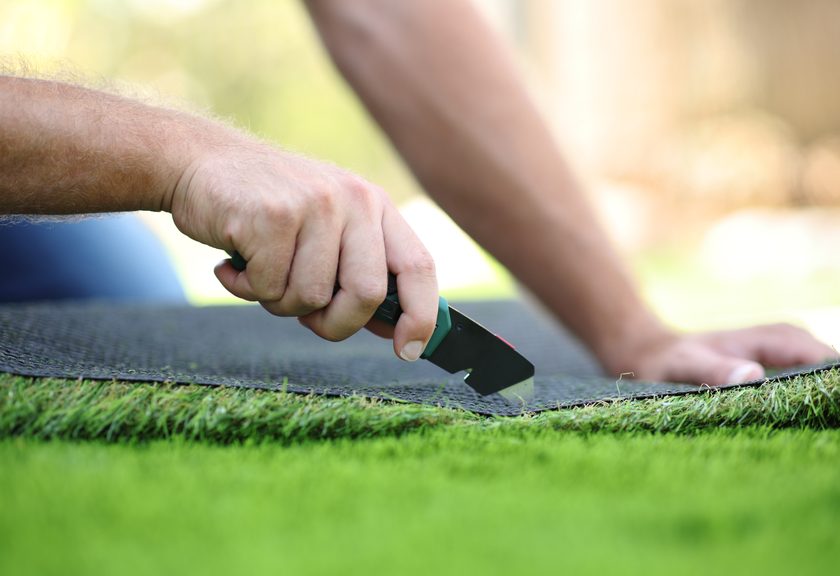
Excavation and base. The area is dug out and filled with crushed rock or decomposed granite, then compacted in layers. On a green the top of the base is usually a finer material, raked and compacted smooth, because the ball will find any lump.
Contours. Slopes and breaks are shaped into that top layer and checked by rolling balls across it before any turf goes down.
Cups. Holes are cut and the cups set so their rims sit at the right level against the finished surface.
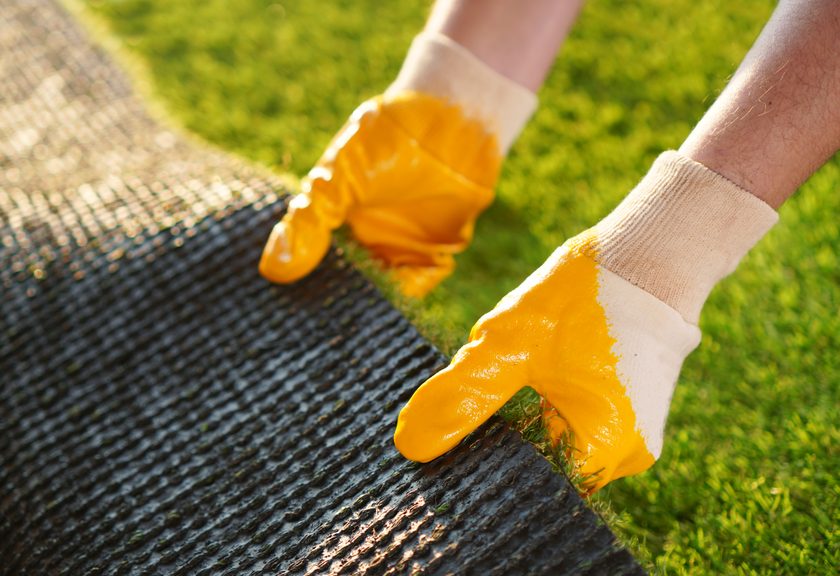
Turf and fill. The putting surface is laid, seamed and fastened, and the fringe or surrounding turf is fitted around it. Sand is usually brushed into the putting turf to set its speed and help it keep its shape.
The details shift with the product and the yard, so ask about them at the visit.
A green in full sun gets hot in summer, like any turf. From June through September, early morning is the least hot time to practice.


A narrow strip along a wall can hold one cup for straight putts. To practice reading break, a wider green with room to putt from a few directions works better. A visit is the easiest way to see what fits.
Yes, if it is planned that way. A putting surface that is filled with sand and sits on a firm base holds a chip better than a lightly filled one. Tell us at the visit if chipping matters to you.
Most often it is the base. A dip or a soft spot under the turf shows up as a wobble in every putt that crosses it. Low sand, flattened fibers and debris on the surface also change the roll, and those are simpler to fix with brushing and topping up.
Have a spot in mind? Phone 623-254-4115, or send the form with a rough size, and the space gets measured and priced for free.
Notes on heat, water and HOAs in town are on the home page. Phone and form details are also on the contact page.