Backyard turf gives you a green place to sit, play and walk barefoot through the mild months, without the mowing, edging and daily watering a living lawn asks for. Surprise Turf Works handles backyard turf for homes across Surprise, from a small patch beside the patio to the whole yard.
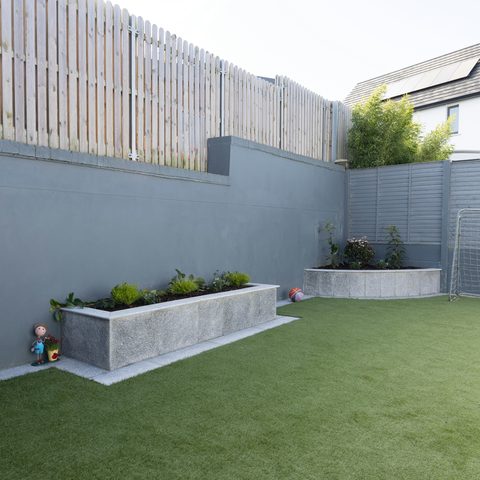
Good layouts start with how the space actually gets used. Where do the kids play? Where does the dog run? Where is the shade at four in the afternoon? Turf goes where people walk and sit, and rock, pavers or plants fill the spots that only need to look neat.
If a dog is part of the picture, say so, because a pet area is built a little differently. The artificial grass for dogs page has more on that.
Measuring the yard and talking through a layout are free, and so is the quote that follows. 623-254-4115 is the number, or use the form beside this.
Free quote. No obligation.
No two backyards price out alike. A handful of things carry most of the weight:
Ask whether the quote can show a couple of versions, such as full coverage against turf in the center with rock around it, so you can compare them.
The same products work out front, where turf is mostly there to be looked at rather than played on. The front is also where HOA landscape guidelines tend to say the most, so check with your association first. Front and back can be measured and quoted on the same visit.
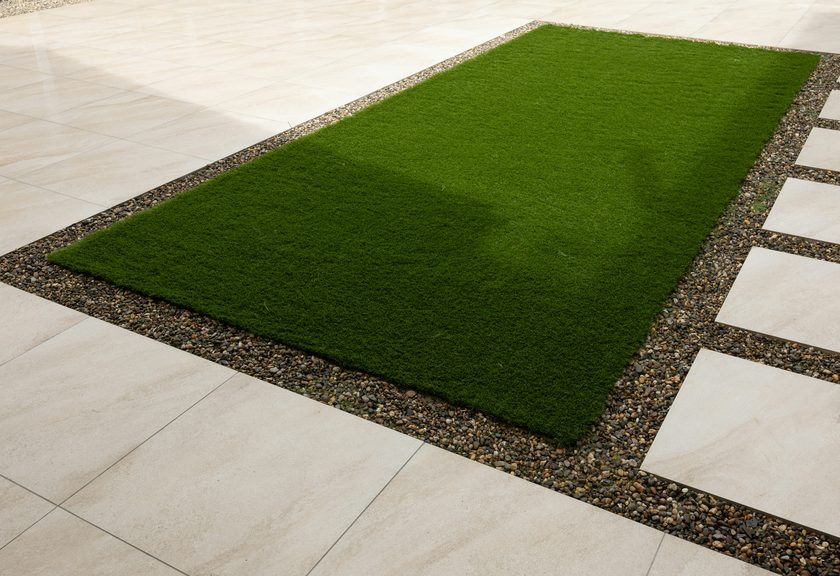
Turf doesn’t have to cover everything. Stepping stones through a turf strip, a gravel border along the wall, or pavers between the patio and the grass keep turf where it is useful and spare it from paths that would wear it flat.
Many products blend two or three greens with some tan thatch fibers near the base, which reads more like real grass from a distance. A single bright green tends to look artificial from across the yard. Look at samples outside, in sunlight, rather than under store lighting.
Shorter turf looks tidy and stays upright under chairs and steady foot traffic. Longer blades look more like a full lawn but tend to flatten along the paths people use most.
Denser turf feels fuller and springs back better after it is walked on. Backings vary, and some let water through more freely than others. That matters most for a pet area or a yard where the soil drains slowly.
The ground decides how much work each of these steps takes.
Clearing and digging. Existing grass and roots, rock or debris come out, and the soil is dug down a few inches so the finished turf meets patios and walks at the right height.
Base. Crushed rock or decomposed granite is spread, graded so water heads away from the house toward a spot that can take it, and compacted firm. Where caliche or hard ground is close to the surface, the grade does more of that work.
Irrigation. Sprinkler heads under the new turf are capped. Drip lines that water trees, shrubs or planters are kept and rerouted where needed.
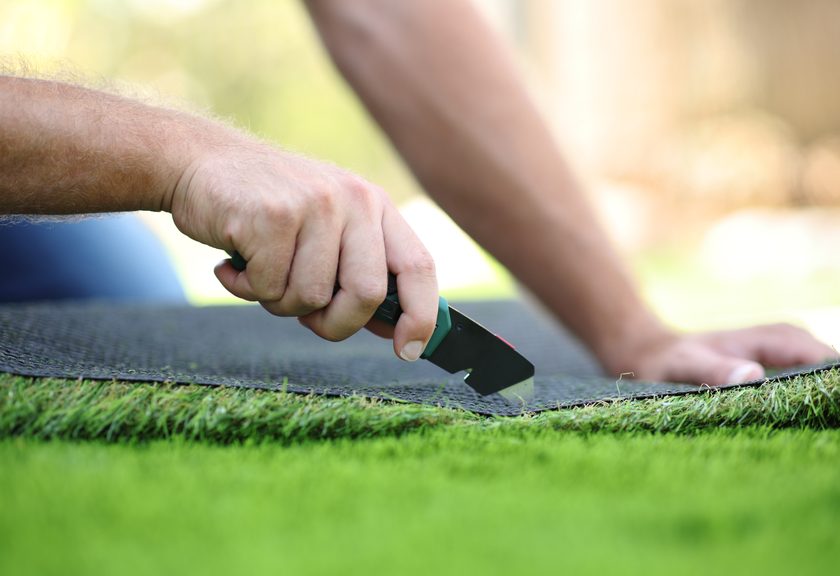
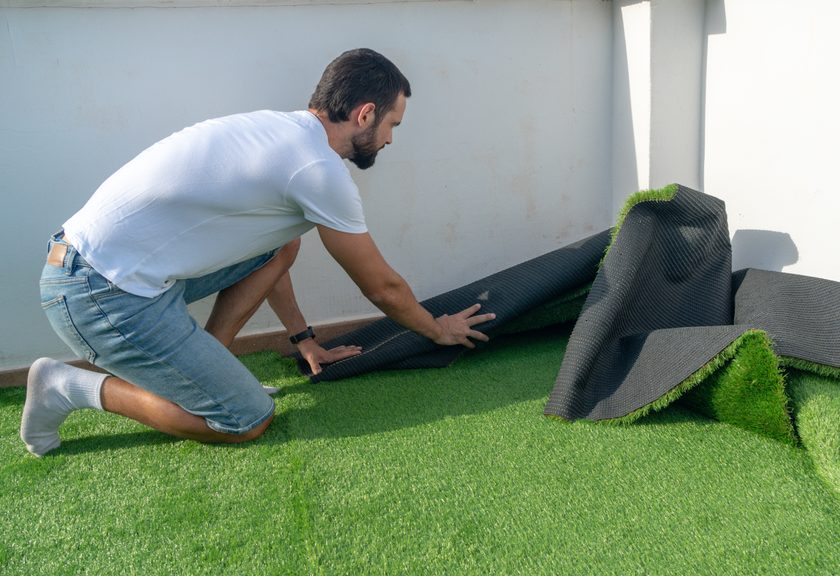
Turf, seams and edges. The rolls go down with the grain facing one way, are joined at the seams and fastened around the borders. Infill is brushed in and the blades are brushed up to finish.
Turf needs less care than a living lawn, but it does need some, and the desert sets most of the list:


Yes. It is trimmed and fastened along a wall the same as along any other border. Make sure water has a way off the turf on that side, because water that collects against a wall has nowhere to go.
It works well there. Turf under a cover gets less sun, which helps on hot afternoons. It also gets less rain, so an occasional hose-down keeps dust from building up between the blades.
Generally, yes. Heavy pieces can flatten the blades underneath, and stakes or anchors go through the turf into the base. Mention them at the visit so the layout allows for them.
Not necessarily. Many yards look and work better with turf in the main area and rock, pavers or plants around the edges, which also keeps turf off spots nobody uses. Ask whether the quote can show both versions.
Measuring is free. Call 623-254-4115 or use the form and say roughly how much of the yard you have in mind.
Notes on heat, water and HOAs in town are on the home page. Phone and form details are also on the contact page.